If your device is cracked, stolen or just too old to get parts for, a new one is usually cheaper than chasing repairs. We install it and file the first test for you.
- PriceFree quote
- Time2–4 hours
- TestIncluded
- FilingIncluded
Ready to book? Same-week appointments.
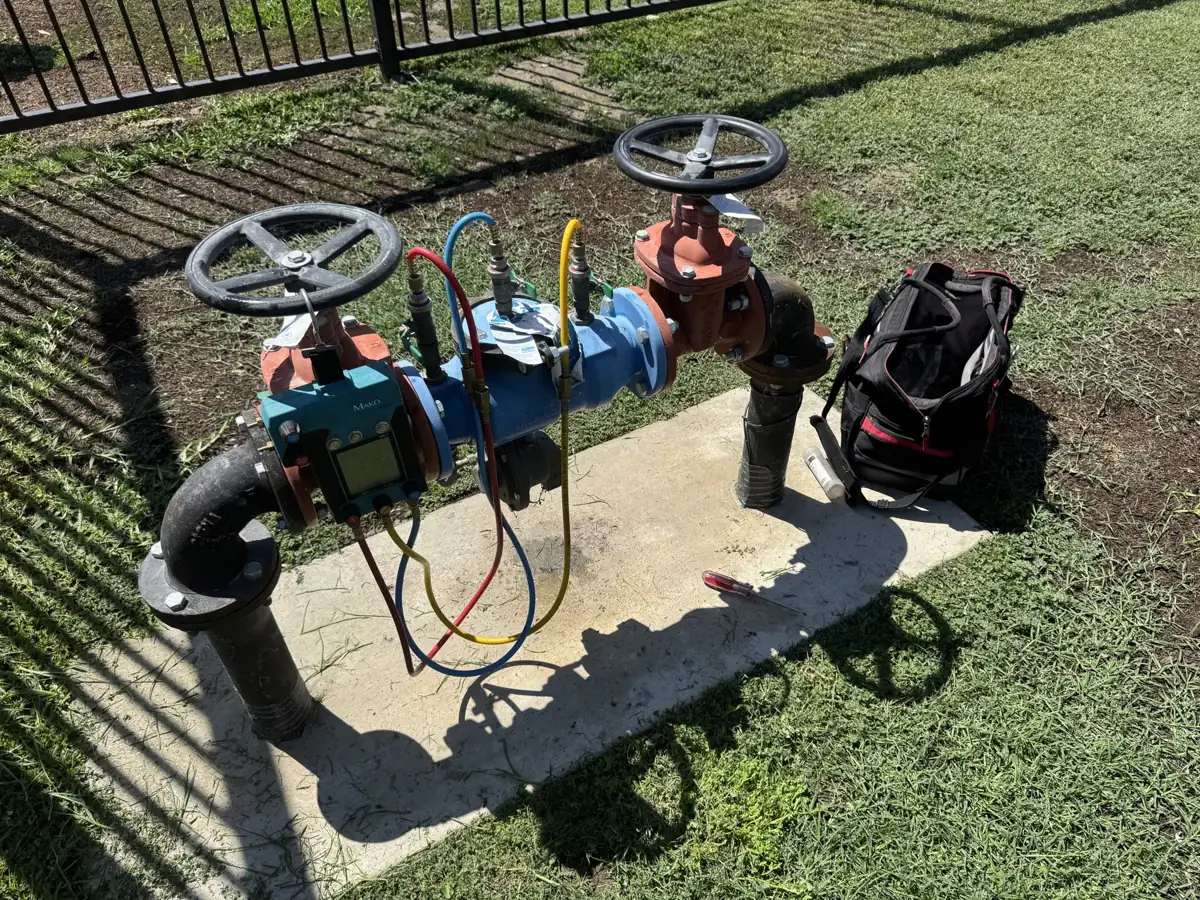
When to replace instead of repair
- Freeze damage or a cracked housing
- Someone stole the brass
- The manufacturer stopped making parts
- You've repaired it more than once and it still fails
If a repair will get you through, we'll tell you.
When replacement makes more sense than repair
Most failed devices can be repaired, but not all of them. The clearest case is a cracked body, usually from a freeze or an impact. Brass and bronze bodies can't be patched reliably, so the device has to come out.
Age is another factor. Some older models are no longer made, and parts are hard or impossible to find. Others have been rebuilt so many times that the seats and internal surfaces are worn past the point where a new kit will hold.
Repeat failures are a sign too. If a device fails year after year even after repairs, replacing it often costs less over time than another round of parts and labor.
Replacing a stolen backflow assembly
Scrap thieves cut brass backflow devices off water lines all over Southern California. What's left is an open pipe and, often, water running into the yard or street.
Close the meter if water's still flowing and call us. Common sizes can usually be replaced the same day, tested on the spot, and reported to your district.
To keep it from happening again, we'll suggest a locking cage on a concrete pad. It costs far less than another replacement.
Upgrades and changes of use
Sometimes the device still works but isn't the right type anymore. If a property changes use, say a retail space becomes a restaurant or an office becomes a dental practice, the hazard level changes and the district may require an RP where a double check used to be enough.
District surveys can also find a device that was never the right type for its connection. In those cases, the old device has to be replaced with one that matches the hazard.
We'll confirm with the district what's required before quoting, so the new device is accepted the first time.
What replacement involves
Replacement starts with confirming the right type and size. In many cases it's the same as what's there, but not always. We'll check whether the existing setup meets current rules for placement, height and clearance, since moving or raising the device during replacement is easier than doing it later.
The water is shut off, the old device comes out, and the new one goes in with new fittings as needed. For most homes and small businesses, that takes two to four hours.
Then the new device is tested, and the passing report is filed with your water district. You get a copy. The device's annual due date usually resets from the date of the new test.
What a replacement costs
Replacement pricing depends on the device type, size and how much fitting work is needed. A 3/4-inch or 1-inch device on a home costs far less than a 4-inch fire line assembly, and an easy swap costs less than one that has to be raised or moved.
You'll get a free quote before any work starts. The quote includes the device, labor, the test and filing the report with your district.
If you're comparing repair against replacement, we'll give you prices for both. Sometimes repair wins, sometimes replacement does, and you make the call.
How fast we can replace a device
Common sizes can often be replaced the same day, which matters most after a theft. Bigger or unusual devices sometimes have to be ordered.
Share the size and type when you call, or text a photo. We'll check what's in stock and give you the soonest slot.
Keeping the replacement safe
It makes sense to protect a new device. A locking cage deters theft, and an insulated cover helps where freezes happen. Either can go on the quote.
We also make sure the replacement is placed right, so yearly tests and future service stay simple.
Keeping the same location or moving it
A replacement is a good time to ask whether the device is in the right spot. If the old one sat in a flooding box, below the sprinklers or squeezed where nobody could test it, moving the new one fixes the problem for good.
Sometimes the location is fine and the new device drops right in. We'll tell you which applies and price it either way.
Whatever the reason for replacement, the new device starts a fresh record with your water district. Its first passing report sets the next due date, and from there it's tested once a year like any other device.
Questions
Should I repair or replace a failed backflow preventer?
Most assemblies can be repaired with a rebuild kit. Replacement makes more sense when the body is cracked or frozen, parts are no longer made, the assembly was stolen or damaged, or your hazard has changed and needs a different type. See backflow replacement.
Can a stolen one be replaced the same day?
Often, if the size is in stock. Call and we'll check.
What to expect when you book backflow replacement
Booking takes a couple of minutes by phone or online. We confirm the address, the device and how to reach it, and we'll give you a time window that works for you. For most homes, you don't need to be there.
On the visit, a certified tester does the work with a calibrated gauge and explains anything that comes up in plain terms. If a repair is needed, you'll get the price before anything happens. When the device passes, we send the report to your water district and email you a copy. Our office is open seven days a week, 6am to 12pm, and emergency calls are answered around the clock.
Where we offer Backflow Replacement
Our testers handle backflow Replacement across Redlands and the surrounding area, from Loma Linda, Mentone, Calimesa, Highland and Yucaipa. Call for the next opening or schedule online.